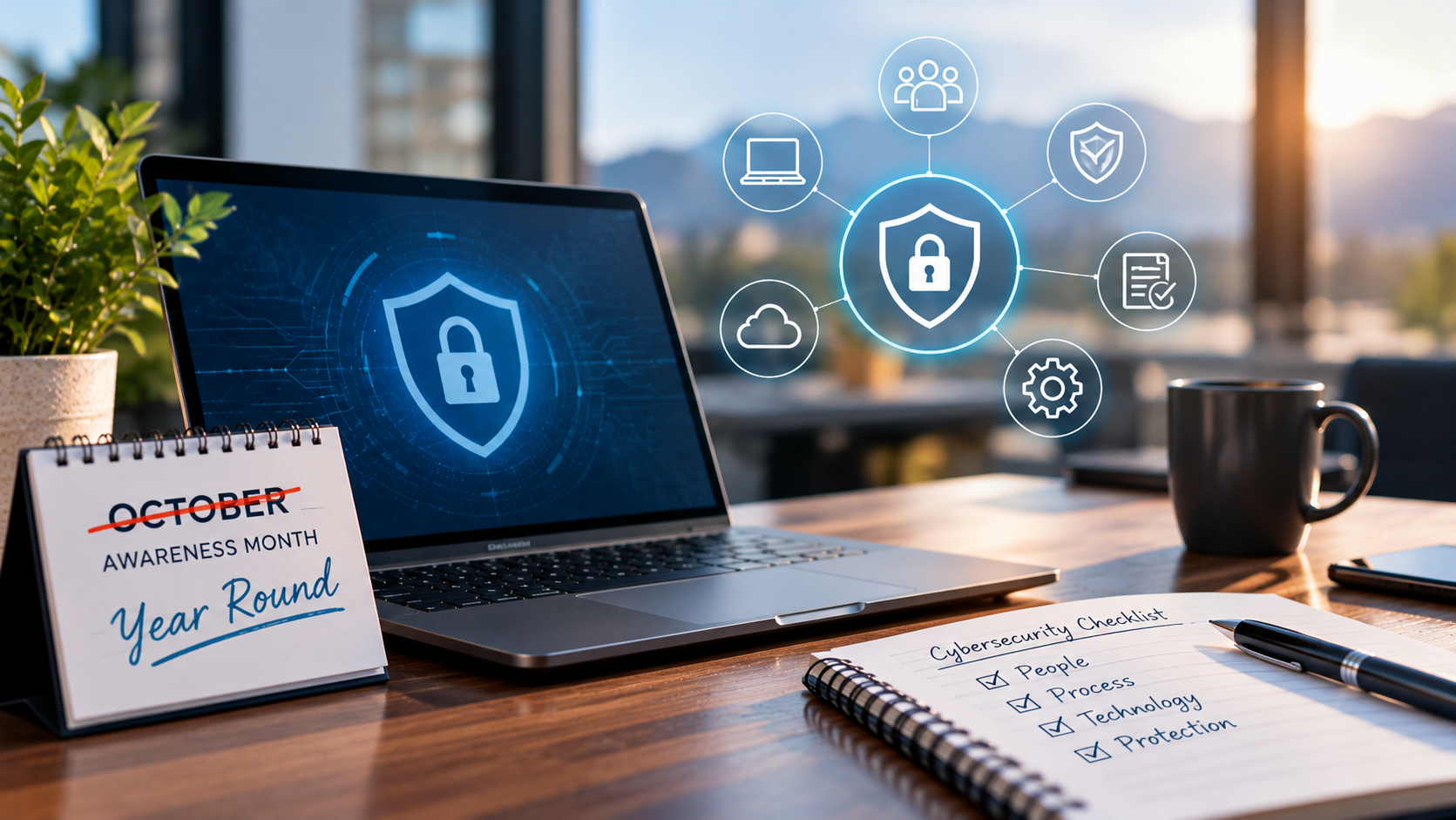
Why Montana businesses need year-round cybersecurity protection, not just October awareness.
October is Cybersecurity Awareness Month, a time when businesses across the country are reminded to strengthen passwords, recognize phishing attempts, and take cybersecurity more seriously.
But here's the problem: Cybercriminals don't operate on a calendar.
Ransomware attacks don't stop on November 1. Phishing emails don't disappear after October. And the vulnerabilities that put your business at risk today will still be there tomorrow unless you take action.
For Montana businesses, cybersecurity needs to be more than an annual awareness campaign. It needs to be an ongoing business priority that protects your employees, customers, operations, and reputation.
At Information Systems of Montana (ISM), we believe cybersecurity isn't something you check off a list once a year. It's a responsibility that requires consistent attention, proactive planning, and the right protections in place every day.
Why Cybersecurity Awareness Month Isn't Enough
Cybersecurity Awareness Month serves an important purpose. It encourages organizations to evaluate their security practices, educate employees, and recognize emerging threats.
However, awareness alone doesn't prevent cyberattacks.
A business might conduct employee security training in October, but what happens when a convincing phishing email arrives in February?
You might review your cybersecurity policies once a year, but what happens when a critical software vulnerability is discovered in April?
Or you might invest in new security tools, but who is monitoring them to ensure threats are identified and addressed?
Effective cybersecurity isn't a one-time project. It's an ongoing process of identifying risks, strengthening defenses, and preparing for the unexpected.
Organizations that treat cybersecurity as a continuous business function are better positioned to reduce vulnerabilities, respond to incidents, and maintain operational continuity.
Why Montana Small and Mid-Sized Businesses Remain Cybersecurity Targets
One of the most persistent cybersecurity misconceptions is that cybercriminals primarily target large corporations.
In reality, small and mid-sized businesses can be attractive targets because attackers may expect them to have fewer security resources, limited internal IT expertise, or outdated technology.
Many cyberattacks are also automated. Attackers use tools to identify exposed systems, compromised credentials, and vulnerable software across thousands of organizations.
That means a Montana business doesn't need to be specifically targeted to become a victim.
Organizations across industries face potential risks, including:
- Healthcare providers: Exposure of sensitive patient information and disruptions to critical services.
- Financial services firms: Theft of client financial records, fraudulent transactions, and compliance concerns.
- Manufacturing companies: Operational downtime, ransomware attacks, and compromised business systems.
- Professional services firms: Unauthorized access to confidential client information and business communications.
- Nonprofit organizations: Exposure of donor information, financial losses, and interruptions to community services.
- Government agencies: Disruption of public services and unauthorized access to sensitive information.
Regardless of your organization's size or industry, cybersecurity threats can create serious financial, operational, and reputational consequences.
5 Cybersecurity Priorities Every Business Should Maintain Year-Round
Protecting your business requires more than installing antivirus software or reminding employees to use strong passwords.
A strong cybersecurity strategy combines technology, people, processes, and ongoing oversight.
Here are five areas Montana businesses should prioritize throughout the year.
1. Continuous Threat Monitoring and Detection
Cyber threats can emerge at any time, including outside normal business hours.
Without ongoing monitoring, suspicious activity may go unnoticed until attackers have already accessed sensitive information or disrupted operations.
Continuous cybersecurity monitoring helps organizations identify unusual activity, investigate potential threats, and respond before incidents escalate.
Businesses should regularly evaluate:
- Endpoint detection and response capabilities
- Network security monitoring
- Unauthorized access attempts
- Suspicious account activity
- Security alerts and incident response procedures
- Vulnerability identification and remediation
The goal isn't simply to stop known threats. It's to identify and respond to suspicious activity before it becomes a business crisis.
2. Ongoing Employee Cybersecurity Training
Employees play a critical role in protecting business information.
However, cybercriminals are becoming increasingly sophisticated in how they manipulate people into sharing credentials, transferring funds, or opening malicious files.
AI-generated phishing emails, impersonation attempts, and fraudulent payment requests can be difficult to recognize, even for experienced employees.
Annual cybersecurity training is a useful starting point, but ongoing education is more effective at reinforcing secure behaviors.
Businesses should provide regular training on:
- Recognizing phishing and social engineering attacks
- Identifying suspicious links and attachments
- Verifying financial transactions and payment changes
- Using multi-factor authentication (MFA)
- Protecting sensitive business and customer information
- Reporting suspicious activity immediately
Security awareness should become part of your organization's everyday culture, not just an October initiative.
3. Proactive Software Updates and Vulnerability Management
Outdated software and aging technology can create unnecessary security risks.
When manufacturers release security patches, they are often addressing vulnerabilities that attackers may attempt to exploit.
Delaying updates can leave systems exposed.
Businesses should maintain an ongoing process for:
- Installing operating system and application security updates
- Identifying unsupported software and hardware
- Reviewing network equipment and firewall configurations
- Conducting vulnerability assessments
- Prioritizing remediation based on business risk
- Maintaining a technology replacement schedule
A proactive approach helps organizations address security weaknesses before they lead to costly disruptions.
4. Reliable Data Backups and Business Continuity Planning
Even organizations with strong cybersecurity protections can experience incidents.
Ransomware, hardware failures, accidental deletions, and other disruptions can make critical business information unavailable.
That's why cybersecurity planning must also address recovery.
Every organization should understand:
- What business data is being backed up?
- How frequently are backups performed?
- Are backup copies protected from unauthorized access and ransomware?
- When were backups last tested?
- How quickly could critical systems be restored?
- Could the business continue operating during an extended outage?
A backup that has never been tested shouldn't be assumed to work when it matters most.
Cybersecurity isn't only about preventing an attack. It's also about ensuring your business can recover when something goes wrong.
5. Regular Cybersecurity Risk Assessments
Your organization's technology environment is constantly changing.
New employees join. Software is added. Devices are replaced. Cloud services expand. New business relationships introduce additional access requirements.
Each change can introduce potential security risks.
Regular cybersecurity risk assessments help businesses identify vulnerabilities, evaluate existing safeguards, and prioritize improvements.
A comprehensive assessment may examine:
- Network and endpoint security
- Identity and access management
- Employee security practices
- Data protection and backup procedures
- Incident response readiness
- Third-party and vendor risks
- Industry-specific compliance requirements
Rather than investing in cybersecurity tools without a clear strategy, businesses can use risk assessments to make informed decisions about where their resources will have the greatest impact.
Cybersecurity Is a Business Responsibility, Not Just an IT Issue
Cybersecurity decisions affect far more than your technology systems.
A successful cyberattack can interrupt revenue, expose customer information, create regulatory concerns, and damage relationships that took years to build.
That's why business leaders need to be involved in cybersecurity planning.
Leadership should be able to answer several important questions:
- What are our organization's greatest cybersecurity risks?
- Who is responsible for monitoring and managing those risks?
- Are our employees prepared to recognize modern cyber threats?
- How quickly would we know if someone accessed our systems without authorization?
- What would happen if our business systems were unavailable tomorrow?
- Does our cybersecurity budget reflect our actual risk exposure?
If those answers aren't clear, it's time to evaluate your cybersecurity strategy.
Cybersecurity is not simply an IT expense. It's an investment in business resilience, customer trust, and long-term stability.
How Information Systems of Montana Helps Businesses Stay Protected
For more than 30 years, Information Systems of Montana has helped organizations across Montana navigate technology challenges and protect the systems they depend on.
We understand that most business leaders don't want to spend their time worrying about cybersecurity threats, software vulnerabilities, or unexpected downtime.
They want confidence that their technology is secure, reliable, and supporting their business goals.
ISM helps organizations take a proactive approach to cybersecurity through strategic IT planning, ongoing monitoring, risk management, employee security awareness, backup and recovery planning, and responsive local IT support.
Rather than waiting for a security incident to expose weaknesses, we help businesses identify risks and develop practical strategies to address them.
Our goal is to help Montana organizations stay secure, productive, and prepared throughout the entire year.
October Ends. Cybersecurity Doesn't.
As Cybersecurity Awareness Month comes to a close, businesses have an opportunity to turn awareness into meaningful action.
Don't wait for another October to review your cybersecurity protections.
Don't wait for a ransomware attack to test your backups.
And don't wait for a data breach to discover gaps in your security strategy.
The best time to strengthen your cybersecurity is before something goes wrong.
At Information Systems of Montana, we're here to help you protect what matters most, not just during Cybersecurity Awareness Month, but every day of the year.
Is your business protected year-round?
Schedule a cybersecurity consultation with Information Systems of Montana to identify potential vulnerabilities, evaluate your existing protections, and build a proactive security strategy for the year ahead.
Frequently Asked Questions About Year-Round Cybersecurity
Why is cybersecurity important all year long?
Cybersecurity threats occur throughout the year, not just during Cybersecurity Awareness Month. Continuous monitoring, employee training, software updates, and regular risk assessments help businesses reduce vulnerabilities and respond to emerging threats.
How often should a business review its cybersecurity?
Businesses should monitor security activity continuously, review vulnerabilities and security updates regularly, and conduct comprehensive cybersecurity risk assessments at least annually or when significant changes occur. Organizations with higher risks or regulatory requirements may need more frequent assessments.
Are small businesses in Montana at risk of cyberattacks?
Yes. Montana small businesses can face phishing, ransomware, credential theft, and other cyber threats. Automated attacks can identify vulnerable systems regardless of an organization's size or location.
What are the most important cybersecurity protections for small businesses?
Essential protections generally include multi-factor authentication, endpoint security, timely software updates, secure and tested backups, employee cybersecurity training, access controls, and an incident response plan.
How can managed IT services improve cybersecurity?
A managed IT services provider can help businesses maintain technology, monitor systems, manage updates, identify vulnerabilities, and develop cybersecurity and business continuity strategies. The specific protections available depend on the services provided.
What should a business do after Cybersecurity Awareness Month?
Businesses should review their current security posture, address known vulnerabilities, evaluate employee training, verify backup and recovery capabilities, and establish a year-round cybersecurity plan with clear responsibilities and measurable priorities.

